
When a child is diagnosed with autism spectrum disorder (ASD), one of the first worries parents have is communication: Will my child talk? Will they be able to make friends? Will people understand them?
Autism often affects social communication, interaction, and how a child uses and understands language. Early intervention speech therapy for autism gives kids a head start on building those skills—especially in the toddler and preschool years—when the brain is most ready to learn.
At Shore Therapy Services in Toms River, NJ, our speech-language pathologists specialize in helping young autistic children build confident communication through play-based, family-centered early intervention.
Why Early Intervention Matters for Autistic Kids
Early childhood (roughly birth to age 5) is a powerful window for brain development. During this time, the brain is especially responsive to new experiences, repetition, and practice. Starting autism speech therapy early can help children:
- Build foundational social communication skills
- Understand language more clearly in everyday situations
- Find reliable ways to express their needs, wants, and ideas
- Experience fewer communication-related meltdowns and frustrations

Early intervention doesn’t try to “change” who a child is. It focuses on giving them tools and support so they can communicate in ways that feel safer, clearer, and more effective—at home, at school, and in the community.
What Communication Challenges Might Look Like
Every autistic child is different, but families in Toms River and across Ocean County often notice similar patterns before a formal diagnosis. Some of the signs that may point toward a need for early intervention speech therapy include:
- Fewer sounds, gestures, or words than expected for age
- Limited babbling or delayed first words
- Using scripted phrases from shows or videos instead of talking spontaneously
- Not pointing, showing, or bringing items to share interests
- Difficulty following simple directions
- Repeating questions instead of answering them
- Avoiding back-and-forth play or conversations
- Leading adults by the hand instead of using sounds, gestures, or words
If several of these feel familiar, you don’t have to wait and hope they “grow out of it.” Scheduling a speech and language evaluation for autism in Toms River is a proactive way to understand what your child needs and how to support them.
How Speech Therapy Supports Autistic Children in Early Intervention
Speech-language pathologists (SLPs) play a key role on early intervention teams for autistic kids. At Shore Therapy Services, we design treatment around real-life routines so progress shows up at home, in daycare, and in preschool—not just in the therapy room.
Building Social Communication Foundations
Before words, there has to be connection. We often start with social communication goals such as:
- Joint attention—sharing focus on a toy, book, or activity
- Simple turn-taking games and predictable social routines
- Using eye gaze, facial expressions, and body language to connect
- Practicing basic social scripts like greetings, asking for help, or showing something exciting

These skills are the backbone of confident communication with caregivers, siblings, teachers, and peers.
Supporting Understanding of Language
Many autistic children understand less language than adults think, which can make the world feel confusing and overwhelming. In early intervention, we work on:
- Understanding everyday directions (“Get your shoes,” “Put it in the bin”)
- Building vocabulary that actually matches home and school routines
- Comprehending simple questions like “what,” “who,” and “where”
- Connecting words to visuals, objects, and consistent routines
When understanding improves, kids are more relaxed and better able to participate in daily life.
Helping Kids Express Wants, Needs, and Ideas
Expressive language therapy focuses on helping kids get their message across—whether that’s asking for a snack, saying “no,” or sharing something they find interesting. Depending on the child, goals might include:
- Moving from sounds to single words
- Expanding from single words into short phrases and sentences
- Turning basic labels (“car”) into more functional phrases (“go car,” “no car,” “more car”)
- Using language for more than just requesting—commenting, asking questions, and sharing experiences
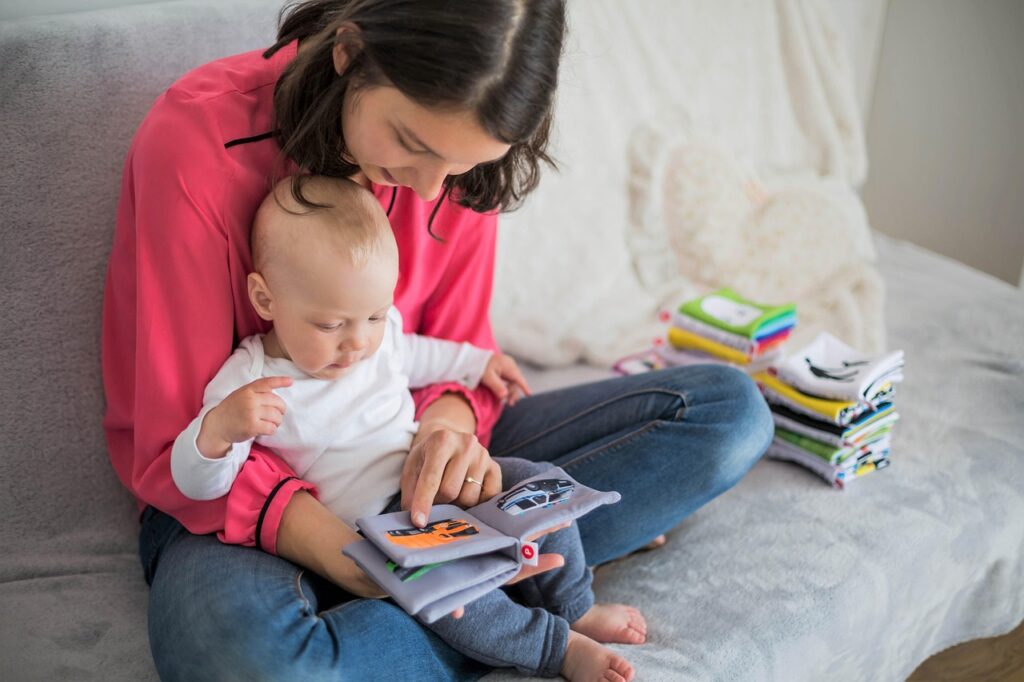
For some children, this work is part of speech therapy for nonverbal autism, where we intentionally use other tools while spoken language develops.
AAC as a Pathway to Communication
AAC (augmentative and alternative communication) provides another way to communicate when speech isn’t yet reliable. It does not “replace” speech; it often supports it. For many autistic children, AAC is what finally lets them participate in decisions, ask questions, and share what they’re thinking.
In early intervention sessions, our SLPs may:
- Introduce simple picture-based communication systems
- Trial communication apps on tablets or dedicated devices
- Model how to use AAC during daily routines like meals, playtime, and getting ready
- Coach parents and caregivers so AAC becomes a natural part of the day
The goal is simple: your child has a voice now—not someday.
What Early Intervention Looks Like at Shore Therapy Services
Families in Toms River, Silverton, Beachwood, Pine Beach, and nearby Ocean County communities choose Shore Therapy Services for autism-focused speech therapy that feels practical and personal.
A Typical Early Intervention Journey
While every child is different, many early intervention plans follow a similar structure:
- Comprehensive evaluation: We review developmental history, current concerns, and how your child communicates today. We combine formal testing with play-based observation and a detailed parent interview.
- Personalized treatment plan: We set clear, functional goals based on your child’s strengths, interests, and needs, and coordinate with pediatricians, early intervention programs, and school teams when appropriate.
- Play-based, child-led sessions: Therapy is built around toys, games, activities, and routines your child actually enjoys. Parent involvement is encouraged so strategies carry over at home.
- Ongoing progress monitoring: We regularly review what’s improving, where your child is still struggling, and how we’re adjusting therapy to keep progress moving.
Throughout the process, we focus on real-life outcomes, not just numbers on a report.

How Early Support Builds Confidence for the Future
When autistic children learn reliable ways to communicate earlier in life, you often see ripple effects everywhere:
- Less frustration and fewer behavior challenges tied to communication breakdowns
- Stronger relationships with family, siblings, and peers
- Better readiness for preschool and kindergarten routines
- More independence in making choices, asking for help, and participating in community activities
Early intervention won’t remove every challenge, but it can make the road ahead feel clearer and more manageable for both kids and caregivers.
When to Consider an Early Intervention Speech Evaluation
You don’t need to wait for a formal autism diagnosis to start speech therapy for your toddler in Toms River. It’s a good time to reach out if:
- Your child’s speech, language, or social skills seem far behind kids their age
- You notice limited eye contact, gestures, or interest in people
- Your child has frequent meltdowns when they can’t communicate what they want
- Your pediatrician, daycare, or preschool has raised concerns about development
Parents are often the first to sense that something isn’t lining up. Trust that instinct. An early intervention speech and language evaluation gives you clarity, not a lifetime label.
Next Step: Autism-Focused Early Intervention Speech Therapy in Toms River, NJ
If you’re wondering whether early intervention speech therapy could help your autistic child communicate more confidently, you’re not overreacting—you’re being proactive.
At Shore Therapy Services in Toms River, NJ, our SLPs provide autism-focused early intervention for toddlers and preschoolers across Ocean County, including Silverton, Beachwood, Pine Beach, and Island Heights. We guide you through the evaluation process, explain findings in clear language, and create a plan that fits both your child and your family.
Ready for clear answers and a real path forward? Contact Shore Therapy Services in Toms River today to schedule an early intervention speech and language evaluation for your child.