Some therapy goals are easy to hear but hard to change. A child may know their R sound does not sound quite right, but still have no idea how to move their tongue differently. An adult may feel their voice getting strained, but struggle to control pitch, loudness, or breath support. Someone working on swallowing may need help understanding which muscles are activating and when.
That is where biofeedback can make speech therapy feel less like guessing and more like learning with a guide. Instead of relying only on verbal cues, biofeedback gives clients real-time information they can see, hear, or feel during therapy. It helps turn invisible movement into something more concrete, which can make practice more meaningful and easier to understand.
At Shore Therapy Services, biofeedback may include tools such as SONAmatch technology when appropriate, especially for clients working on challenging speech sounds like R.
At Shore Therapy Services in Toms River, NJ, biofeedback is used as one more way to make therapy personalized, practical, and focused on measurable progress.
What Is Biofeedback in Speech Therapy?
Biofeedback is a therapy technique that uses technology to show what is happening in the body during a task. In speech-language therapy, this may include information related to speech sound production, muscle activity, pitch, loudness, breath control, or other patterns that affect communication. The goal is not to make therapy feel more complicated. The goal is to make the process clearer.
Think of it like using a mirror when learning a new movement. Without the mirror, you may know something feels off. With the mirror, you can see what is happening and make a more accurate adjustment. Biofeedback works in a similar way. It gives the client and therapist a shared visual or auditory cue, so they can work toward the same target together.
Why real-time feedback matters
Speech and swallowing movements happen quickly. Many of them are small, subtle, and difficult to describe. Real-time feedback helps clients connect what they are doing with what they are hearing or seeing. That connection can make it easier to repeat a correct movement, adjust an incorrect one, and build awareness over time.
How Biofeedback Supports Speech Sound Therapy
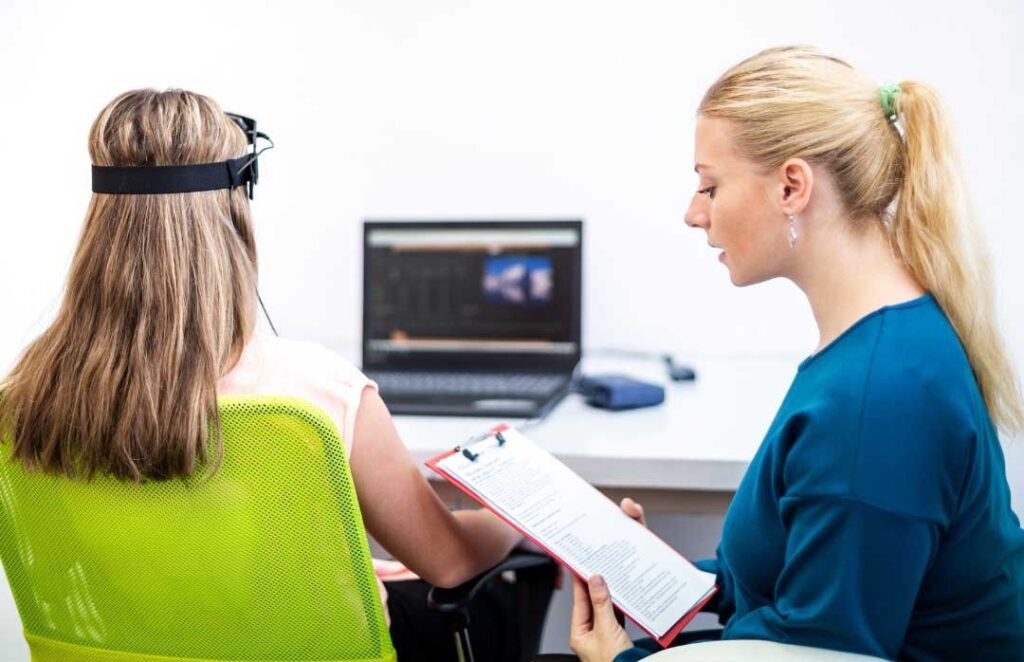
Biofeedback can be especially helpful for clients working on persistent speech sound disorders, including sounds that are difficult to explain with words alone. One common example is the R sound. Many children can hear that the sound is not quite right, but they may not know how to change the shape or placement of the tongue to produce it more clearly.
Traditional cues like “move your tongue back” or “make it stronger” can help some clients, but they do not work for everyone. Biofeedback adds another layer of support. It can help the client see or hear the difference between their current production and the target sound. Over time, that feedback can support more accurate practice
It can reduce the trial-and-error feeling
Speech therapy requires practice, but practice should not feel like throwing words at a wall and hoping one sticks. Biofeedback gives the session a clearer feedback loop. The therapist can guide the client, the client can observe what changes, and both can adjust from there.
For children, this can also make therapy more engaging. Seeing feedback on a screen or hearing a measurable difference can turn practice into something more interactive. For adults, it can make therapy feel more direct and purposeful, especially when they want to understand exactly what they are working to improve.
How Biofeedback May Help With Voice Therapy
Voice therapy often involves learning how to use the voice in a healthier, more efficient way.
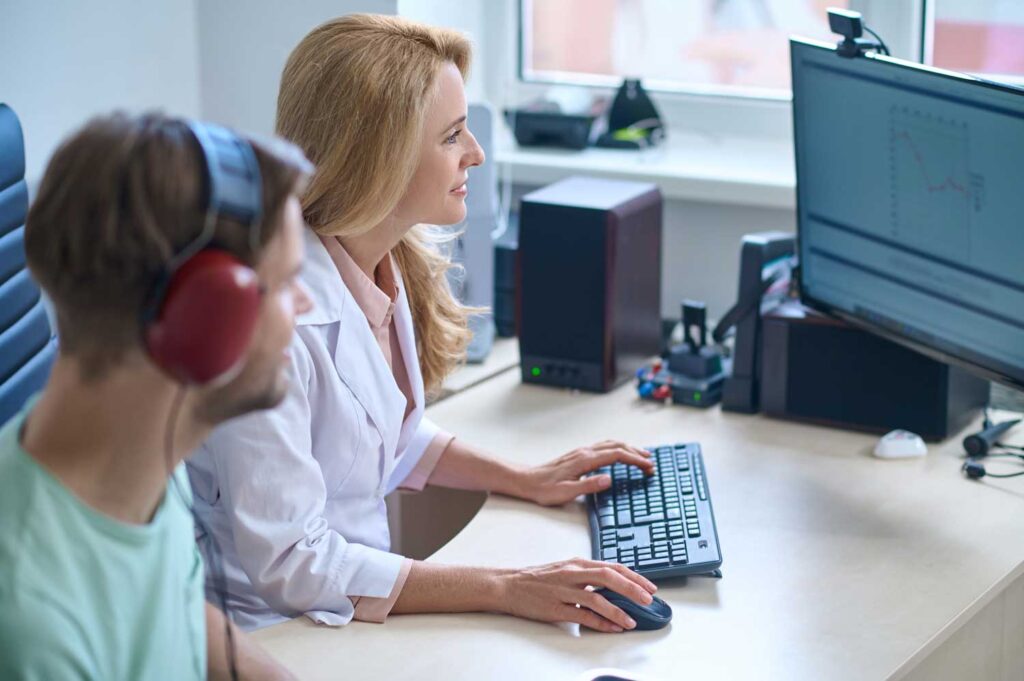
For someone with a voice disorder, therapy may address vocal strain, pitch, loudness, breath support, or overall vocal quality. Biofeedback can help by giving the client a clearer picture of what their voice is doing during specific exercises.
For example, someone may be working on speaking with better breath support or maintaining a more comfortable volume. Feedback can help them notice when they are using too much effort, getting too quiet, or pushing the voice in a way that feels strained. Instead of trying to guess what “easy voice” or “steady loudness” means, the client has more information to work with.
Voice therapy should always be based on the client’s individual needs and medical history. When appropriate, biofeedback can be a useful tool for building awareness and helping new voice habits feel more consistent.
How Biofeedback May Support Swallowing and Feeding Goals
Swallowing is another area where biofeedback may play a role. Swallowing requires coordination, timing, strength, and safety. For clients receiving swallowing and feeding therapy, the treatment plan may include strategies, exercises, positioning, diet recommendations, or referrals depending on the evaluation findings.
In some cases, biofeedback can help clients better understand muscle activity during swallowing exercises. This can be useful because many swallowing movements are difficult to feel accurately from the inside. When a client can see feedback related to effort or timing, it may help them participate more actively in therapy and practice with better awareness.
Swallowing therapy should always be individualized
Not every swallowing concern is treated the same way. Coughing during meals, food feeling stuck, frequent throat clearing, weight changes, recurrent pneumonia, or avoiding certain foods can all point to different needs. A speech-language pathologist can help determine what type of evaluation and treatment is appropriate.
Biofeedback is not a shortcut and it is not used for every person. It is one tool that may be added when it supports the client’s specific goals and safety needs.

What Biofeedback Therapy Can Feel Like During a Session
A biofeedback session does not need to feel intimidating. The therapist explains what the client is looking at or listening for, then connects that information to the therapy goal. The client practices a sound, voice exercise, or movement while receiving feedback. The therapist then helps interpret what happened and what to adjust next.
The best part is that the client is not left trying to decode everything alone. The technology provides information, but the therapist provides the clinical guidance. That combination is what makes the tool useful.
For children
Biofeedback can make practice more visual and interactive. A child who struggles with a stubborn sound may feel more motivated when they can see progress instead of only being told to try again. It can also help parents better understand what their child is practicing and why home practice matters.
For adults
Biofeedback can make therapy feel more measurable. Adults often want to know what is happening, what they can control, and how to practice more effectively outside of the clinic. Clear feedback can help connect the therapy exercise to real-life communication, meals, work conversations, or everyday routines

Who Might Benefit From Biofeedback?
Biofeedback may be helpful for clients who need additional support with:
- Persistent speech sound errors, including difficulty with the R sound
- Speech clarity concerns that have not improved with traditional cues alone
- Motor-based speech challenges that require careful practice and repetition
- Voice goals related to pitch, loudness, vocal effort, or breath support
- Swallowing therapy exercises that require better awareness of effort or timing
- Therapy goals that benefit from visual or auditory feedback during practice
The right fit depends on the client, the diagnosis, the therapy goal, and the clinical judgment of the speech-language pathologist. Some clients benefit from biofeedback right away. Others may need foundational therapy skills first. The evaluation helps determine the best path forward.
The Bigger Benefit: Less Guessing, More Understanding
One of the most frustrating parts of speech, voice, or swallowing therapy is knowing that something needs to change, but not knowing how to change it. Biofeedback helps close that gap. It gives clients a clearer way to understand their own patterns, adjust with guidance, and recognize successful attempts when they happen.
That kind of awareness matters. When clients understand what they are working on, therapy can become more collaborative. They are not just repeating exercises. They are learning how their body works, how to notice changes, and how to carry those skills into daily life.

Biofeedback Speech Therapy in Toms River, NJ
At Shore Therapy Services, therapy is designed around the individual. Biofeedback may be used as part of a personalized plan for speech sound production, voice goals, or swallowing and feeding support when it fits the client’s needs. The goal is always the same: clearer communication, safer function, and greater confidence in everyday life.
Families and adults in Toms River and Ocean County can contact Shore Therapy Services to learn more about biofeedback therapy and schedule a consultation.